Efficient memory usage Text guided high-fidelity 3D generator?
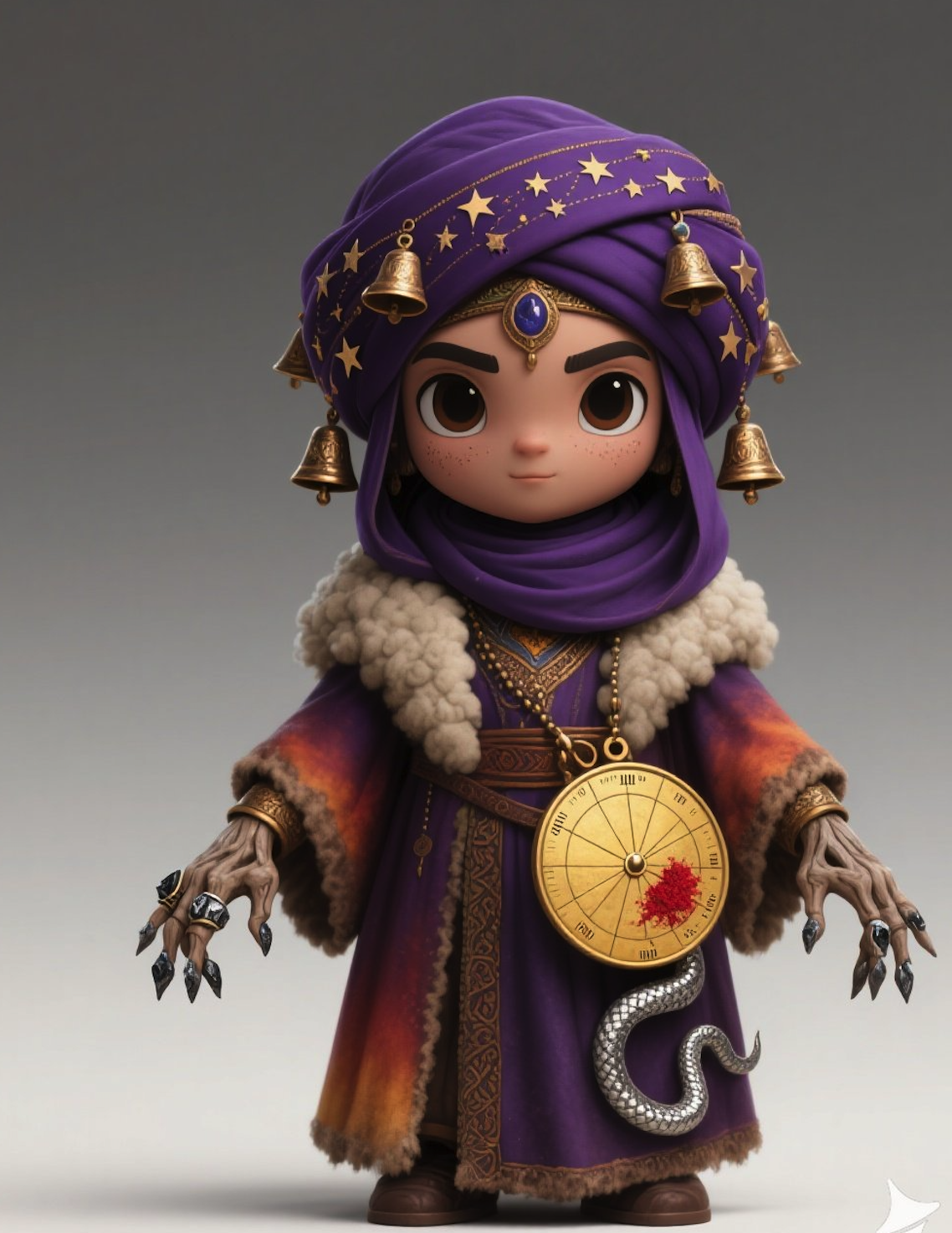
Discovering the landscape regarding dimensional drafting is transforming quickly, led by breakthrough systems that accelerate this change: verbal-to-3D design. This revolutionary branch widens entry into 3D design to an expanded public, permitting designers with restricted technical knowledge to build advanced 3D models simply by inputting text descriptions.
Contemplate a dimension where all participants can express their thoughts in tri-dimensional environments, irrespective of their experience. This represents the advantage that text-to-3D modeling presents, releasing the creativity within all designers.
Machine Learning Driven 3D Art: Beginning a Fresh Era
The field of conceptual artistry is entering a radical change with the launch of AI-enabled 3D modeling. This trailblazing technology enables users to form advanced 3D models with unmatched smoothness. AI engines understand user instructions and transform them into detailed 3D images. From architectural blueprints to objects for gaming, the opportunities are virtually expansive.
A primary perk of AI-empowered 3D modeling is its power to open the creative workflow. Even inexperienced users can currently generate professional-standard 3D models. This unleashes a range of prospects for makers to construct their concepts into reality.
- AI-assisted 3D modeling may facilitate design by streamlining repetitive procedures.
- Interaction between human designers and AI mechanisms can encourage unprecedented solutions.
- This methodology hold the aptitude to reshape assorted industries, from media to health services.
Designing Spatial Constructs Through Words: Text-to-3D Empowerment
The area concerning 3D modeling is undergoing a remarkable evolution following the emergence of text-to-3D generation. This revolutionary technology permits users to create their imaginative visions plainly through inputting written prompts. Envision describing a fantastical creature or a finely detailed object, and seeing it manifest before your observation in three-dimensional form. This convergence of language and technological fabrication creates an abundance comprising opportunities for architects and every person with a urge for fabrication.
- This novel technology
- supports crafting of artistic designs
- Envision drafting imaginative beings coming alive
Converting Creativity Into Form: AI-Driven 3D Innovation
The space of 3D creation is undergoing a dramatic metamorphosis, fueled by the vast potential of automated intelligence. Previously limited to visions, advanced 3D models and designs are now becoming substantial facilitated by AI. These advanced algorithms can fabricate fine geometries, textures, and materials with extraordinary speed and accuracy. From conceptual art to product designs, AI is transforming creators across numerous industries to materialize their visions in ways previously unimaginable.
This integration of AI and 3D design opens up extensive platforms for both accomplished practitioners and new artists. Inclusive interfaces make these high-performance tools reachable to a broad user base, fostering the democratization of the artistic process and spurring novel breakthroughs on an unprecedented scale. As AI tools mature, we can expect even more advanced features that will diminish the boundary between vision and manifestation.
- Forming
- Creation
- Movement
Entering New Realms: Artificial Intelligence in 3D Fabrication
The landscape of visual arts is engaged in a significant evolution. With the appearance of cutting-edge AI platforms, the ability to create 3D models has become more accessible. This breakthrough authorizes creators to represent their notions with swiftness and efficiency unequaled.
Visualize a environment where sophisticated 3D models are fabricated instantly, driven by elementary text inputs. This is no more myth; it represents the affirmation currently appreciated globally.
- Intelligent 3D modeling environments are becoming prevalent.
- They enable participants with rudimentary design knowledge to fabricate professional-grade 3D models.
- Covering architectural projects to detailed product types, the fields are extensive.
Elevating Spatial Design with AI Assistance
The territory of 3D design advances quickly, driven by the groundbreaking force of artificial intelligence. Deep learning engines have emerged as invaluable co-creators, assisting designers to expand their creative boundaries and speed up design workflows like never before.
From producing detailed models to delivering innovative ideas, AI tools enhance designer capabilities with unprecedented force. This partnership of human creativity and machine intelligence reveals a realm of prospects, making it feasible to visualize and manifest 3D models previously regarded challenging.
- Smart design tools offer designers varied possibilities to explore.
- Progressive workflows empower designers and AI to cooperate productively, refining designs continuously.
- Complex 3D constructs can be assembled quickly and with impressive accuracy, freeing designers to concentrate on the artistic aspects of their projects.
As AI techniques evolve, its role in 3D design will become increasingly integral. Embracing this cutting-edge partnership will support designers to realize the future of 3D art, transcending previously understood edges.
Elevating Standards: AI-Enhanced 3D Modeling Unleashed
The field of 3D modeling embraces a monumental innovation, driven by the unmatched capabilities of artificial intelligence. AI-empowered tools are empowering makers to build and produce 3D models with previously unseen detail. These advanced algorithms can generate complex structures from simple prompts, tearing down traditional design boundaries and pushing the limits of what is workable. From convincing models to abstract designs, AI is modernizing 3D modeling to be more accessible while assisting a young assembly of creators.
- Unlocking the capacity of innovation
- A New Chapter in Modeling
- From Ideas to Reality
Embracing the Advanced Phase in 3D: Text-to-3D Platforms
The sphere of 3D creation is rapidly evolving at an extraordinary rate. Innovative platforms are coming forth that employ the power of text to create stunning 3D models with exceptional ease. These text-to-3D technologies are revolutionizing the 3D design process, keeping it accessible to a amplified user base than ever before.
- Visualize assembling intricate artifacts simply by inputting them into a electronic interface. Text-to-3D platforms turn ideas into models.
- Employing architectural blueprints to unique jewelry, the options are endless.
This innovative progress in 3D creation is primed to transform fields, supporting innovation and creativity across the expanse.
Deep Learning Enabling Swift and Accurate 3D Design
The world of 3D creation is undergoing a far-reaching transformation, triggered by the rapid progress of artificial intelligence. Smart computational engines are now capable of creating refined 3D models with unmatched quickness and precision, revolutionizing markets from architectural design to manufacturing and entertainment. Historically, 3D modeling called for laborious, time-intensive manual work requiring considerable input and expertise. Nevertheless, AI-enhanced tools boost the workflow, allowing creators to swiftly iterate, experiment, and craft their concepts to life with amazing capability.
- Also, AI possesses the ability to analyze vast troves of existing 3D models to discover patterns and trends, helping it to produce innovative designs that reshape creativity.
- Hence, the distribution of 3D creation is increasing, arming both individuals and businesses with restricted resources to be active in this groundbreaking technology.
This set of advancements are ready to unlock new frontiers across a extensive applications, from customized products to interactive platforms. The future of 3D creation is strongly intertwined with the ongoing evolution of AI, promising a era where imagination stretches infinitely.
Universal Accessibility of 3D Printing
The field of 3D printing has participated in a dramatic change, stepping beyond a niche technology to an increasingly common tool. This accessibility is triggered by various factors, including the economic accessibility of 3D printers and software, coupled with a growing community of makers and designers contributing knowledge and resources.
Accordingly, 3D printing is now within reach of participants, companies, and even educational institutions, allowing them to fabricate tangible objects with outstanding liberty. This joining of technology and imagination has the capacity to disrupt a extensive range of markets, from medicine to education, triggering innovation and strengthening individuals to give physical form to their inspirations.
Connecting Speech and Spatial Creations
{The realm|The world|The field|The environment|The space|The One-click 3D optimization domain|