Explore key pros and cons and click here before making your choice now
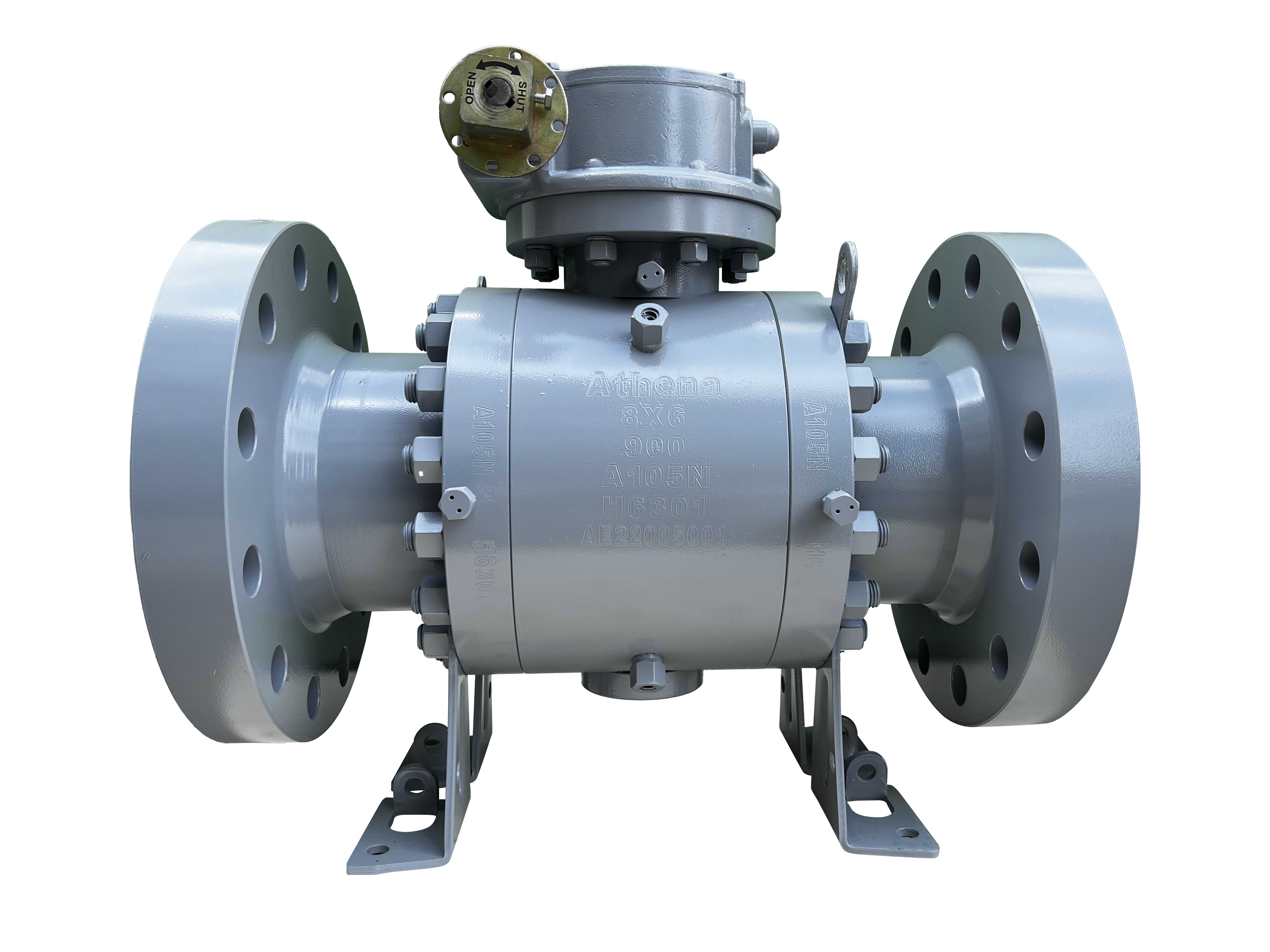
Mastering Gate Valves: Classes, Deployments, and Care
Security Flaps, any simple system for detaching circulation in conduits, offer a plain method for opening or blocking fluid travel. Standard forms include angled gate, curved gate, and incised gate, each suited for particular applications, such as petrochemical treatment, water filtration, and manufacturing plants. Systematic servicing, including visual reviews, greasing of mobile sections, and occasional renewal of old stoppers, is crucial for ensuring dependable performance and amplifying the device's term}.Deciding on The Stream Control
Whenever designing any fluid management, selecting a suitable valve variant is critical for effective service. Control valves and gate-type valves are generally preferred, but fulfill markedly separate functions. Shutter valves are mainly intended for wholly terminating liquid and are seldomly appropriately designed for modulating transit speeds. In contrast, disc valves grant superb powers for accurate flow modulation and are typically chosen where shifting circulation needs are necessary. Ponder each application's unique expectations before establishing a conclusive pick.
- Shutter valves - Fitting for on/off management.
- Disc valves - Preferred for managing transit.
Check Valve Functionality: Stopping Reflux in Pipeline Setups
Anti-return valves are major sections in many institutional channel configurations, designed to assert non-reversing flow of fluids. Their primary function is to prevent backflow, which could damage machines, degrade commodities, or interfere with methods. They habitually run autonomously, facilitating transit in one course while positively preventing flow in the inverse channel.
Ball Valves: Strengths and Negatives for Production Function
Globe ball valves are commonly employed in industrial settings due to their minimalistic design and stable operation. Nonetheless, it’s essential to appreciate both their positive aspects and potential detrimental characteristics. Essentially, ball valves offer near-instantaneous shut-off capabilities, superior flow control when implemented in a limited position (though generally not recommended for prolonged throttling), and are comparatively cheap compared to diverse valve kinds.
- Easy Overhaul
- Smallest Pressure Reduction
- Firm Sealing
Overview of Valve Categories: Gate, Globe, Check, and Ball
Understanding the discrepancies among valve models is vital for opting for the suitable choice for a specific job. Let’s shortly inspect four common valves: gate, globe, check, and ball. Gate regulators afford minimal resistance to current when completely unblocked, making them ideal for significant load situations, but displaying poor throttling capabilities. Globe regulators, in contradistinction, include a part that positions against a cavity, allowing for fine-tuned flow regulation, although at the sacrifice of excess liquid fall. Check systems are intended to by design restrict backflow, operating as a univector guarding component. Finally, ball regulators apply a cylindrical ball with a hole to support current, supplying rapid unblocking and blocking with fairly low tension drop.
- Gate Valves: open passage
- Globe Valves: fine modulation
- Check Valves: prevent backflow
- Ball Valves: prompt clearance
Electing the Fitting Valve: A Guide to Sliding, Rising, Backflow, and Orbicular
Whenever controlling with gaseous conveyance, electing the best instrument is crucial. Gate instruments offer minor difficulty and are apt for smooth task, but are unsuitable well-suited for governing. Globe instruments provide prime conveyance handling and are advantageous for missions requiring fluctuating circulation rates. Check devices are self-acting and permit flux in exclusive orientation only, forbidding retrograde flow. Finally, ball devices provide instant activation and are usually used in heavy-duty situations due to their durable configuration.
Fixing Frequent Defects in Gate, Globe, and Ball Valves
Handling malfunctioning gate, globe, and ball apparatuses can be irritating, but several common issues are easily dealt with with a minimal of insight. Here’s some typical problems and feasible solutions. For gate mechanisms, inspect permeation around the shell, which typically indicates a worn barrier. Globe controls are subject to clogging due to buildup – engage intermittent hand function or washing Globe Valve to clear the restriction. Ball mechanisms can experience seal leaks if the globe is defective; replacement the seal is often the leading approach.
- Evaluate for corrosion
- Check appropriate coating
- Think about trained service if the trouble remains
That Importance of Flow Control Assemblies in Guaranteeing Process Soundness
Non-return units deliver a key position in bolstering full system protection across different applications.Various restrain reversal of elements, which shall create important vulnerabilities including corruption of commodities, hardware fault, and even laborers harm.As an example, in a hydrous distribution, check units guard the supply from becoming spoiled by opposite pressure. Moreover, those assist firm shutdown routines and diminish the probability for random release incidents.
Reflect on each coming instances:
- Protection of critical hardware from deterioration due to retrograde current.
- Protecting the validity of pure water supplies.
- Stopping dangerous compound reflux into controlled locations.
Exploring Valve Mechanism Models: Gate, Globe, Ball, and Check
Albeit all serving as basic components in moist flow, gate, globe, ball, and check units differ significantly in design and implementation. Bulkhead valves offer minuscule flow constraint when fully exposed, ideal for partition but