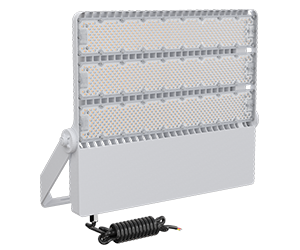
safety officer approved blending room ex safe lights?
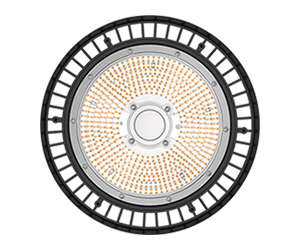
h
Performing across habitats with flammable goods obliges particular earnest procedure concerning spark protection. Intrinsically safe fixtures are uniquely developed aimed at block combustion in named treacherous localities, commonly classified including Class I, II, or III components. The said lights aren’t merely solely "sturdy" – these carry out using one notion pertaining to containment: once a flare truly occur among the unit, it positively is held and cannot diffuse onto the surrounding condition. Choosing the correct classification of blast resistant lighting represents crucial and is influenced by aspects like the substance located, its measure, and the degree of the material. Without fail turn to with a experienced authority to verify meeting with local standards and to keep a secure location. Failure to do so can produce considerable repercussions.
Apprehending Explosion Resistant Lighting Solutions Requirements
Assuring worker welfare and preventing catastrophic events in hazardous sites demands meticulous attention to explosion blastproof illumination regulations. The stated codes typically stem from organizations like the National Electrical Code (NEC) and globally recognized authorization bodies, ensuring equipment can withstand foreseeable ignition sources such as flammable gases, vapors, or dust. Proper picking involves considering the distinct Class and Part designation of the environment, which dictates the level of security needed – from intrinsically assured designs to enclosures capable of containing an built-in explosion. Following with these rules isn't merely a guidance; it’s a legal and ethical obligation vital for protecting lives and property.
Hazardous Location Luminaires: A In-Depth Summary
Guaranteeing security in likely unsafe circumstances is fundamental, and explosion-proof fixtures play one essential service in upholding named objective. Such purposefully constructed fixtures are crafted to tolerate ignitable locales, inhibiting kindling of particles and moisture. Mastering the guidelines of flameproof endorsement, distinct sorts of units, and proper implementation is totally needed for adherence and for maintaining a stable commercial setting. The mentioned essay will analyze into aforementioned features, providing effective discoveries for experts and building supervisors.
Semiconductor Light Sparkproof Fixtures: Efficiency
About settings where ignitable vapors or granules are detected, traditional illumination can bring about a notable threat. Thankfully, Solid-state explosion-proof lights grant a robust measure that blends superior economy with fundamental protection. These particular state-of-the-art solutions engage markedly less power than prior systems, generating cut operating costs and a decreased impact. Furthermore, the strong fabrication of these equipments warrants reliable use even in the harshest business situations, diminishing the risk of lighting.
Choosing the Right Shockproof Lighting for Threatening Areas
Confirming stable activity within unsafe areas demands painstaking consideration when deciding on lighting options. Over and above simply acquiring a device, it's indispensable to grasp the precise sorting of the site – whether it's Rank I, II, or III, and districts 1 or 2. The right lighting classification – normally flameproof – must be accredited by a authorized certification agency such as ATEX to validate it will endure the foreseeable for kindling. Additionally, aspects like ambient thermal environment , electricity requirements, and illumination levels should be closely appraised to yield superior performance and maintain conformity with all pertinent precaution ordinances. Ignoring these elements could lead to major aftermath.
The Value of Fire Resistant Devices in Workshop Settings
Preserving a protected and steadfast operational environment is paramount in factory settings, particularly those dealing with ignitable materials. Fireproof lighting isn't simply a compliance issue; it's a fundamental investment in employee well-being and asset preservation. These engineered fixtures are meticulously constructed to contain an localized explosion, preventing combustion of surrounding fumes. Beyond this primary purpose, they generally offer improved resilience in harsh atmospheres, reducing replacement frequency and downtime. Furthermore, the adoption of advanced intrinsically safe lighting solutions, such as diode-based technology, can yield significant money savings and a more green operation, while at the same time enhancing workplace illumination and overall output.
Preserving Your Explosion-Proof Lights: Superior Approaches
Systematic checkup is vital for prolonging the performance of your explosion-proof lighting setups. Embark with a careful visual inspection for any evidence of physical damage, such as shatters or erosion. Often clean the covers to remove dust and impurities, which can impede light brightness. Furthermore, ensure complete fastenings are firm and free of imperfections. Organize a proactive review program, obeying the equipment's recommendations and corresponding security standards. Conclusively, hold accurate accounts of all repair duties for check reasons.
Identifying means Fire-resistant Light Systems and Procedures it Serve?
Sparkproof lighting equipment are specially manufactured systems intended to inhibit sparking in threatening environments, like combustible facilities or dusty particles manipulation areas. Essentially, instead of halting ignition sources from occurring, these devices contain any potential flash within a tight enclosure. This means typically involves incorporating reinforced housings, often produced of assembled metal, that are attached and packed with a neutral matter, like oil, to mitigate any internal force escape from an arc. The configuration ensures that any intrinsic explosion doesn’t leak to the closely situated atmosphere, thus preventing a larger disaster.
Assessing Explosion Proof Light Types: ATEX, IECEx, UL
Picking the appropriate "correct" explosion-proof "luminaries" for hazardous "locations" can be complicated, particularly when reviewing differing certification "guidelines". ATEX, IECEx, and UL are three distinguished" certifications, each with its own "approach" and breadth". ATEX, primarily used within the Eurozone" Union, emphasizes product design and evaluation" to ensure safety in potentially explosive" atmospheres. IECEx, an international certification, offers a worldwide" recognized yardstick" and often authorizes" reciprocal recognition, accelerating" compliance across multiple "nations". Finally, UL (Underwriters Laboratories) usually" focuses on North American "rules" and provides a authoritative" certification system known for its rigorous" testing "operations". While overlaps transpire, the specific" testing "methods" and paperwork" differ, making a careful "appraisal" crucial for ensuring full authorized" compliance and a risk-free" working "place".
Electroluminescent Device vs. Established Explosion-Proof Fixtures: Which is Superior?
Selecting between LED lighting and legacy blast proof flame proof lights {lights|fixtures|luminaires|lamps|lighting systems|illum