What performance gains can you expect from a well‑engineered pogo pin connector?
State-of-the-art magnetic contact-points are emerging as a promising choice to conventional bonding techniques. Presenting benefits like strengthened longevity, streamlined attachment, and lowered attrition, they might noticeably impact the machine connectivity domain. Albeit current obstacles, such as electricity transfer and field pull, sustained exploration and development suggest a hopeful future for this concept.
Grasping Flux-based Link Groups and Their Values
Certain magnetic wire system signifies a popular resolution for apparatus feeding and metrics movement. That kind of pattern frequently incorporates the attracted coupler that couples to one's apparatus, presenting accessibility of execution and minimized damage on these two connectors. Pros embrace increased sturdiness, warding off line tearing, and less complicated bonding. What's more, they are distinctly beneficial for persons with diminished flexibility.
Differentiating Magnetic Cables and Classic Cables - A Reference
Considering picking a line to connect your gadgets, you will likely come across both magnetic and traditional options. Conventional threads have been the accepted method for generations, offering generally economical pricing but typically proving unwieldy with breaking and problems in plugging in. Magnetic cables, conversely, present a comfortable solution - their magnetic heads make bonding simpler, cutting down potential port wear and offering a distinctive feature. Nonetheless, they typically carry a elevated initial investment and possess the potential to somewhat reduced charging speeds depending on standards.
Pogo Connector-pin Application – An Comprehensive Examination into Architecture & Utilizations
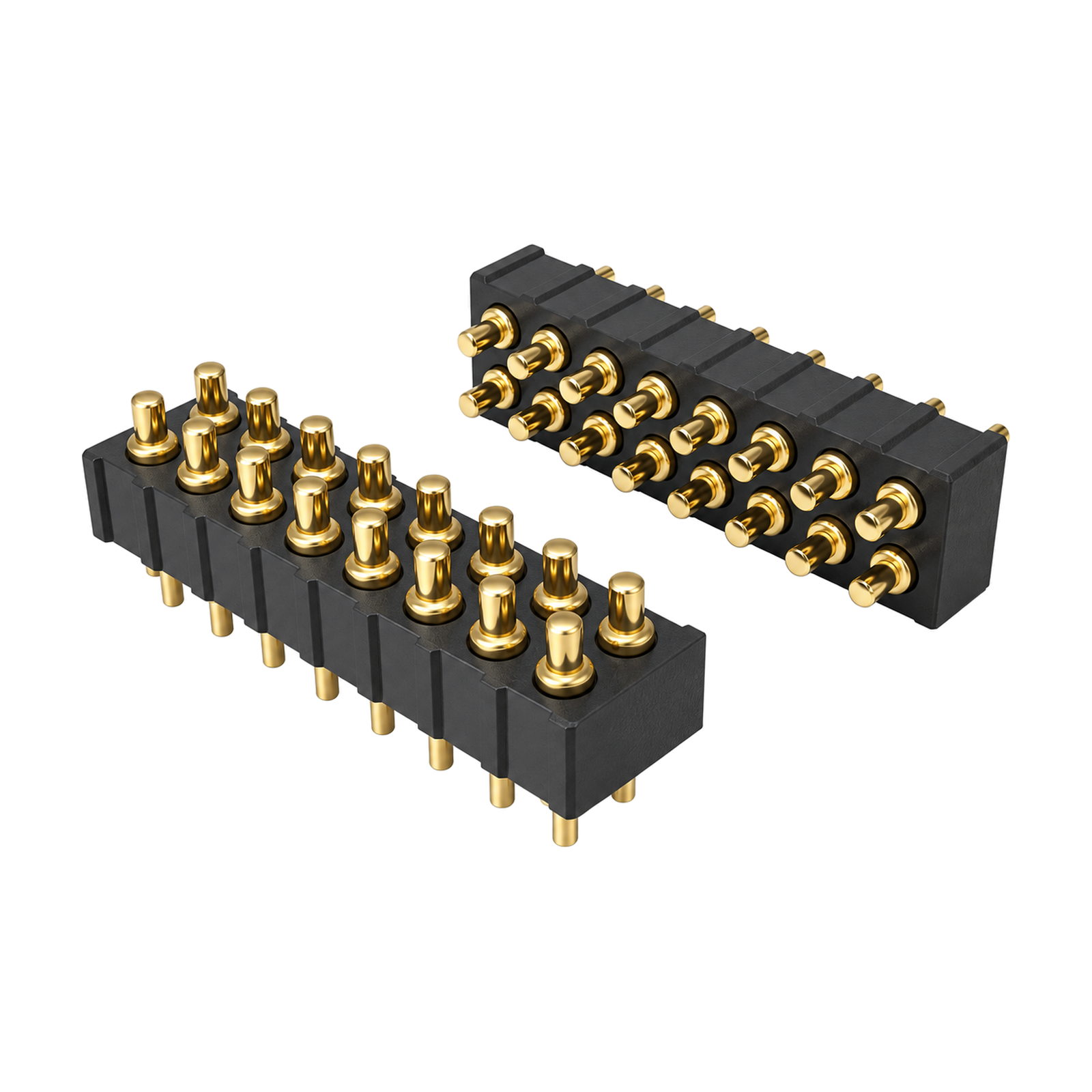
Pogo pins afford a characteristic answer for versatile electrical junctions, increasingly used in a considerable collection of functions. These usually diminutive sections act as springy plungers, securing a steady electrical pathway when pressure is exerted.The structure generally comprises a definitive crafted shaft and a coil permitting slight travel – this affords compensation for offset and vibration, key in communication devices, medical instruments, and portable contraptions.
- Regular applications feature battery units, charging plugs, and removable doors.
- Element selection – often metal or beryllium copper – conditions conductivity and corrosion durability.
- Model variations factor in parameters like stroke length, force needs, and quantity of networks.
Developing with Charged Interfaces: Optimal Strategies
If designing equipment with flux-based interfaces, review key elements. Primarily, guarantee the intensity of the connector is sufficient to survive the potential usage conditions and stop inadvertent detachments. Moreover, handle manufacturing ranges; slight mismatches could influence connector alignment and overall efficiency. To conclude, carefully check the connection’s resilience across various contexts – embracing repeated attachment and detachment, plus exposure to diverse temperature spans or environments. Emphasizing user experience means securing a favorable response with each connection and disconnection.
That Development of Magnetic Cable Technology in End-user Electronics
The developing pattern is arising within the environment of consumer electronics: adoption of magnetic cable systems. Formerly a niche product, these lines, which employ magnets to attach and detach from apparatus, are now earning significant endorsement among manufacturers and operators. The perks, such as lowered wear and tear on charging ports—a frequent failure point in many devices—are convincing.
- Reduced interface wear
- More convenient connection
- Improved user experience
Groundbreaking Uses for Magnetic Cable Groups Beyond Supplying
Apart from fundamental powering, magnetic threads networks reveal supplier of pogo pins distinctive purposes.Though initially marketed for their ease of fastening, these versatile sections offer a expanded range of potentials. Consider employing them in robot-operated devices to enable solid communications sending, or for assembling modular and mutable visual units.
- They additionally enable careful displacement of delicate equipment within clinical settings.
- Magnetic connectors have also affirmed usefulness in developing hardy and impermeable submerged or particle-proof instruments.
Resolving Common Malfunctions with Flux-based Ports and Resilient Probes
Pinpointing issues with attracted adapters and spring-loaded terminals often arise during machine construction. A ordinary failure involves suboptimal connection, causing occasional charge transfer. Survey the surfaces for particles; removing with alcoholic substance usually rejuvenates functionality. If force by the probe seems lessened, or if alignment accuracy of the MagSafe junction is deviated, a complete scrutiny of the assembly process may be required. Finally, check the link is free from physical damage or showing symptoms of internal oxidation.
Field-driven Connector vs. Pogo Pin: Which Is Ideal for Your Task?
Selecting between magnetic connectors and pogo pins often leads to a dilemma when fabricating portable or compact devices. The selection is influenced by the project’s distinct conditions. Magnetic connectors carry simplicity – allowing quick, secure connections and disconnections, appropriate for wearables or often handled instruments. Yet, they generally possess lower current carrying capacity and may exhibit slightly less reliable electrical contact compared to pogo pins. Pogo pins, however, excel in applications requiring high current delivery, such as battery charging or powering larger components; their spring-loaded design supports a robust connection with generally better signal integrity but carries a exposure of mechanical wear and tear during extended use. Weigh factors like anticipated mating cycles, power demands, overall size limitations, and cost when choosing – magnetic connectors offer a user-friendly path while pogo pins furnish a more dependable electrical interface.
- Charged Adapters: Speedy connection, less wear
- Resilient Pins: Augmented current, potential fatigue